Sense Maxxing at the Fancy Food Show – A Rush of Emerging Trends
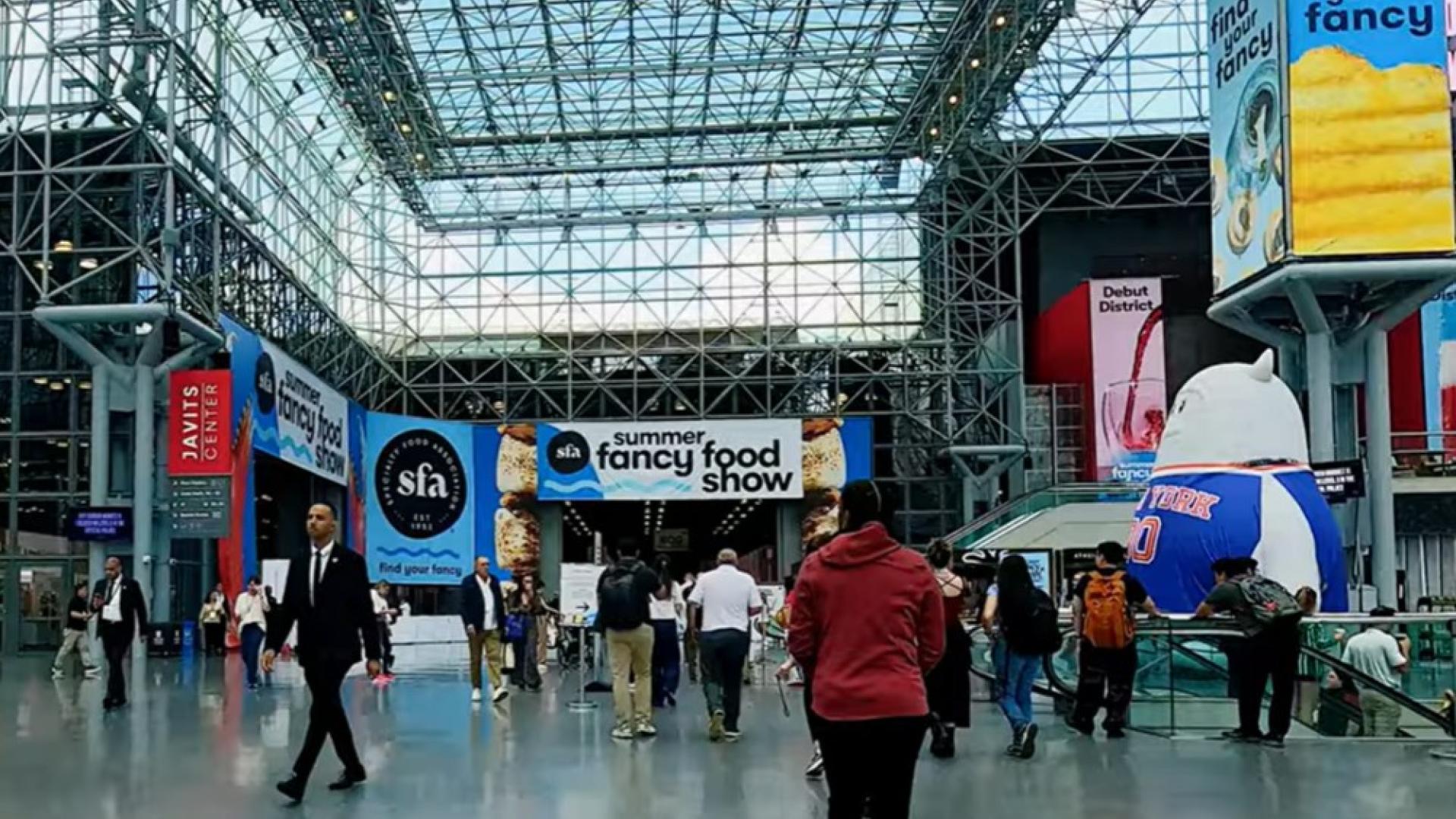
FROM EXPERIENCE I knew the Summer Fancy Food Show would be an overwhelming scene. The event filled nearly the entire Javits Center in Manhattan with 2,500+ exhibitors from 45+ countries showcasing a vast array of new products before they hit the market.
More than 13,000 attendees roamed the exhibition, scouring exhibits touting next new flavors, ingredients and formulations that would define menus and store assortments in the year ahead.
The Specialty Food Association, who have organized this event for many decades, had previously declared “Sense Maxxing” to be its first-ever “trend of the year.” In its Specialty Consumer Outlook Report 2026, the organization defined its key dimensions:
- Sensory Saturation. Maximizing taste, sound, smell, and sight all at once.
- Visual Brightness. Using bold, dynamic, and striking colors that pop.
- Engineered Crunch & Friction. Embracing tactile and acoustic impacts like loud crunches or shatter-shell coatings.
- Visceral Reactions. Seeking out extreme flavor notes like aggressive sourness or fiery spice.
All these elements were in evidence on this year’s exhibit floor. Almost every stand showcased either new or emerging food concepts. International food companies from 57 countries occupied approximately 30% of the exhibits, with groupings clustered by national origin as well as product categories.
Visit the Summer Fancy Foods Show official website to download their Fancy Forecast report.
The competition for buyers’ attention is intense. Innovation is in evidence, as aspiring vendors seek to distinguish their unique selling propositions from larger, more established brands. Who would have thought dehydrated watermelon would exist (from Israel), and without water is it still watermelon?
My personal top product trends:
- Soda beverages proliferate. Possibly the biggest trend is the introduction of more carbonated drink concepts. We know about Poppi, but that is just the start. There were at least 40 brands of soda. Among flavors I never would have expected were milk-flavored soda, many versions featuring apple cider vinegar, and many types of flavored waters.
- More “all-natural” items than ever. The concentration on all natural ingredients is now a selling point to the masses, not just a “health-food” pitch. A clue: package ingredient labels where almost every word has fewer than three syllables. None were chemicals. Today’s shoppers want to know what goes into their bodies. It can be a soda, a snack, and imported foods. The other driving factor is that being all natural helps the new brands stand out from the mainstream brands.
- Diversification of once-generic items. In the past I discovered that olive oil, like wine, can be paired with certain foods. Staples like vinegars, honey and vanilla extracts on display were similarly positioned. Each touted their own recommended use, from complementing flavors of other ingredients to helping bring out a feature like making bread fluffier.
- Snack flavor varieties get more intense and diverse. The snack food niche is the second biggest category being showcased. We saw a vast array of types and flavors, spanning seeds, cakes, popcorn, chocolate, and more. Each was unique in presentation, addressing a consumption behavior that just keeps building. The types of snacks and flavors are driving innovation. So many snacks, from pumpkin seeds to air fryer brownies, to imported local tastes.
- Imported tastes. As the USA becomes more ethnically diverse with more people from more cultures, they bring along comfort foods from their home countries. Proliferation of world flavors is a growing market trend, which will expand to other groups as a natural organic movement.
These trends reflect key strategies that a new food company might incorporate to enter the market and compete with leaders who command market dominance, distribution and shelf space. It is no coincidence that many of challenger brands exhibiting here are selling directly to the consumer, boosting profits and avoiding the dominant companies. They invest in influencer marketing and social media to gain visibility, in the hope of proving awareness and demand that will help them win large scale distribution in the future.