New Rules of Food Marketing: Personalization, Precision & Performance
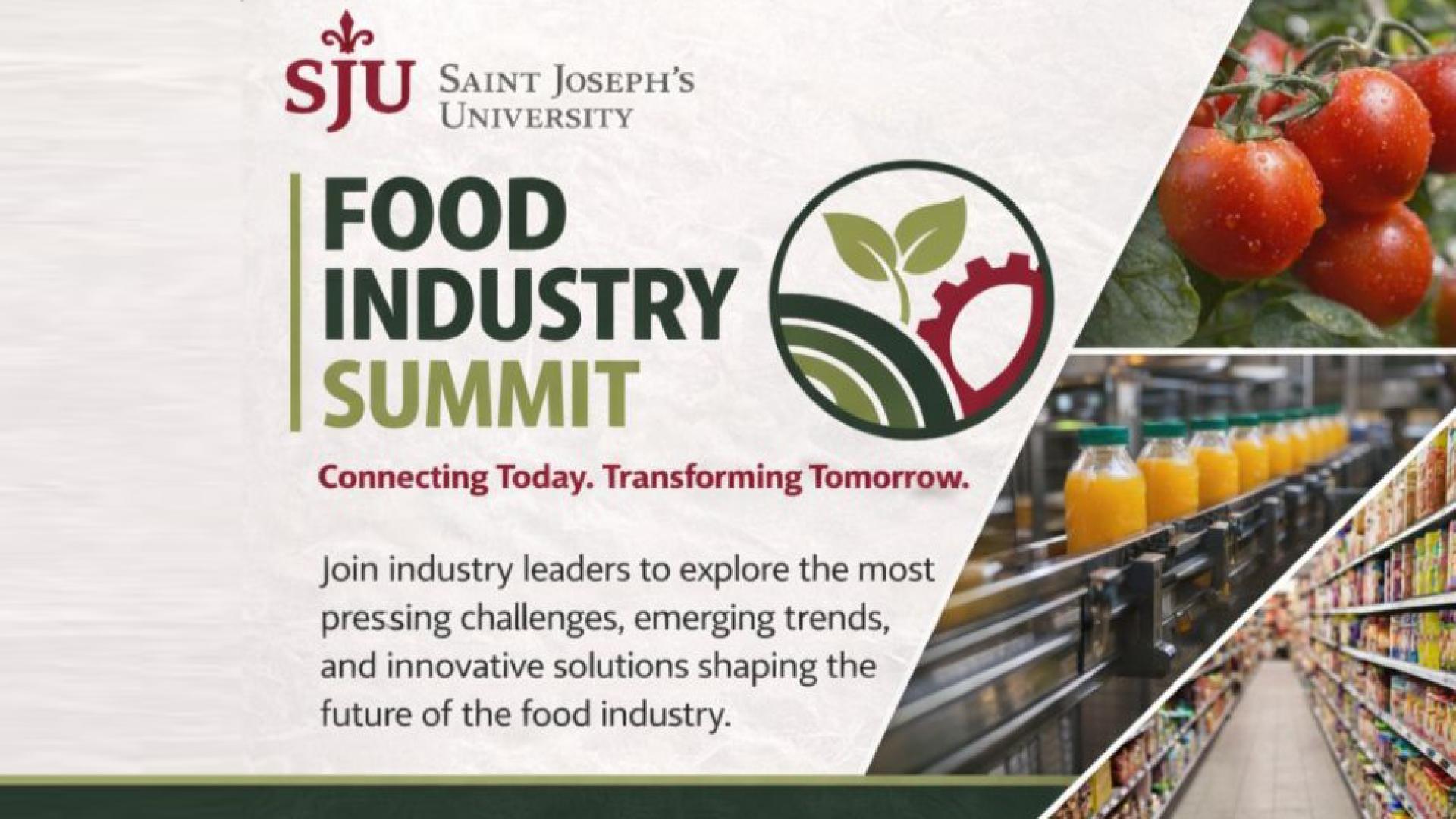
LAST WEEK, CPGMATTERS REPORTED some key themes from the April 17 Food Industry Summit
in Philadelphia. The event has been hosted annually by the St. Joseph’s University Department of Food Marketing since 2007.
This week we have the privilege of sharing some additional commentary from several of the students who were in attendance. Their perspective is a little different—and we should pay careful attention, since they represent both our industry’s future consumers and its decision-makers.
Read our earlier coverage of the Food Industry Summit
The Summit featured ten speakers who covered perspectives from retailers, manufacturers, CPG data insights companies, AI adoption experts, and people advocating for changes in the food industry.
Students identified a diverse set of themes that emerged in the presentations: Market trends, protein packing, artificial intelligence, GLP-1s, regulation, and the Gen Z shopper.
Many thanks to Assistant Professor of Practice, Michael Marzano, for sharing these student reports. The excerpts which follow have been lightly edited.
Speed and Trust: Twin Currencies of Food Retail
“The customer is changing faster than we are. They’re less loyal and less forgiving.” That observation from, seasoned retail CEO, Judy Spires, captured the defining tension at Saint Joseph’s University’s 2026 Food Industry Summit. Today’s food companies are being pushed to move at unprecedented speed, while at the same time rebuilding trust with increasingly skeptical consumers. The winners will be those that can do both.
Speed is reshaping how consumers discover and buy food. Platforms like TikTok are no longer just marketing channels: they are points of sale, inspiration, and validation. With nearly a third of consumers switching brands based on influencer recommendations, the traditional path to purchase has compressed dramatically.
As Brian Huff, CEO of Nissin Foods noted, consumers are now “channel agnostic,” expecting brands to meet them wherever they are, with tailored and relevant offerings. Tools like ingredient-scanning apps are accelerating decision-making even further, empowering shoppers to evaluate products in seconds.
To keep up, companies must rethink how they operate. Speed today is not just about marketing; it’s about organizational design. Brands need faster product development cycles, shorter go-to-market timelines, and a willingness to test and iterate.
As one theme echoed throughout the summit: “Nail it, then scale it.” Eric Skae, CEO of Carbone Fine Food illustrated this with a disciplined approach to innovation. The company exclusively launches products rooted in clear consumer insight rather than chasing every adjacent opportunity.
by Jenna DeLoria
Product Quality Demands a Singular Focus
Erik Skae, CEO of Carbone Fine Food, brought the message to focus on one thing and do that one thing better than the rest. He talked about how success can be hindered when people try to expand and reach for things they are not.
He emphasized the importance of quality ingredients in his company’s Italian sauces. An example of this obsession with quality would be the standards Carbone maintains to ensure their sauces are up to standard. Skae discussed how the tomatoes are sourced from Italy, how the basil needs to be fresh so it doesn’t spoil, how the onions are diced right on site, etc.
This obsession with product quality and on doing things well stems from maintaining a start-up mindset and culture, he said. Carbone has stayed lean, with only a handful of employees who are completely bought in, to avoid any bottlenecks with a larger, less engaged workforce.
by Sheamus Capuzzi
Cater to GenZ and Meet the AI Boom
“The New Consumer Playbook,” a session led by C.A. Ferolie experts Kassidy Mulryne, business insights manager, and Matthew Chiocchi, director of business intelligence, explored the unique characteristics of Gen Z consumers, their sense of identity, and what they look for in a brand. This digitally native, values-driven and hyper-connected cohort is not only savvy about their spending, but also their marketing consumption.
The challenge for marketers is to win this target quickly and efficiently with authenticity, personalization, and a frictionless omnichannel journey—all in three seconds while the consumer divides their attention across multiple devices. No small feat.
Julie Lyle President, North America & Board Director, TCC Global, explored how brands can stay chosen in an agentic marketplace, reminding the room that winning today’s shopper is about creating emotional relationships that cannot be displaced by an algorithm. Lyle’s belief that the AI boom opens a massive opportunity for loyalty economics was encouraging, and it was clear in listening to her that we as marketers still have immeasurable power to influence the shopper journey as well as brand perception.
by Wendy Kaufman
Food Trends Cut Across the Generations
Right now, and over the next few years, there will be a convergence among the people who buy the majority of food. We currently have four generations buying food: Baby Boomers, Gen X, Millennials, and now the emergence of Gen Z. The shopping preferences of Generation Z are influencing how retailers and manufacturers engage with consumers across various industries.
Much of this change is driven by social media and other outlets where consumers get their information, a topic that was covered extensively in discussions about AI.
There was a recurring theme about how artificial intelligence can be used and where the industry can go with it. The most important point is that the food industry needs to embrace the AI revolution to avoid falling behind. The former CMO of Crayola, Victoria Lozano, emphasized that even in a rapidly changing, AI-driven world, technology will not replace people or creativity, reinforcing the importance of continuing to prioritize human creativity alongside innovation.
The MAHA movement is another significant driver of these changes, connecting to regulation, shifting customer preferences, and how retailers are bringing those preferences into the store, while manufacturers position themselves to meet consumers where they want to shop.
by Natalie Larson
Creativity as a Life Skill
Former CMO of Crayola Victoria Lozano discussed the role of creativity in a changing world influenced by constant information consumption and AI to complete thinking.
Lozano emphasized that creativity is a life skill, more important than ever to set yourself apart in a world of fast changing technology. The definition of creativity is inclusive of many behaviors including curiosity, problem solving, collaboration, and learning from mistakes.
In a world of constant consumption in an age of social media, practicing creativity requires little moments of boredom. It’s more important than ever to understand where one gets their creativity from and determine how to fit that into a daily routine.
It is a great reminder that in today’s world we need to be more intentional about how we create space for creativity to level up in our day-to-day roles.
by Kara Graziosi
Creativity: Not a ‘Trait’ but a ‘Practice’
The session "Creativity and Beyond: Skills for Success in a Changing World” positioned creativity as a skill that all professionals need to be sharpening, despite the rapid focus on AI in today’s marketplace.
As artificial intelligence and automation continue to reshape our industry, human perspective and creative thinking are becoming increasingly essential for sound decision-making and meaningful differentiation. With that in mind, it’s no wonder that creativity is the second fastest-growing skill globally. Currently, 70% of employers say creative thinking is becoming increasingly important for performance. Creativity can be directly linked to innovation, growth mindset, problem-solving ability, leadership potential, and adaptability.
The session emphasized the importance of externalizing ideas to clarify them. Whether through sketching, writing, or mapping concepts on a whiteboard, moving ideas from our heads into a tangible form helps strengthen and refine them. Creativity is not a personality trait; it’s a practice. As Victoria Lozano highlighted, clarity follows expression, and thinking improves when it’s made visible.
This session reinforced that creativity is fueled by the breadth of our inputs. While it’s natural to focus on industry-specific news and content, truly original thinking is shaped by ideas that come from outside of our fields of expertise. By broadening our inputs, we learn to creatively connect ideas and concepts that don’t typically intersect, revealing patterns, insights, and opportunities that wouldn’t otherwise be visible.
In a business environment and world that’s increasingly impacted by AI, creativity may be the most valuable and undervalued skill, and it’s one that we all have the opportunity to hone. This session made it clear that creativity isn’t about waiting for inspiration; it’s about making space for original thinking. The future of food and brands that win in-market won’t be won by those companies who simply execute faster, but by those who think more originally.
by Amanda Forgione
Green-Scoring America’s Food Products
Poor nutrition results in 600,000 American death each year. This alarming statistic was shared by Galen Karlan-Mason, CEO and Founder of GreenChoice, which bills itself as “the food health & sustainability intelligence company.” Its GreenScore platform assigns a score to products based on how well they meet certain criteria for food health and sustainability.
Karlan-Mason shared summary data and provided thoughtful insight into several problems currently plaguing the food industry, as well as some recently developed “resolutions.”
He cited data from the CDC to place blame on ultra-processed foods as a culprit for death and disease, and how much the U.S. spends on healthcare to combat these health problems. He proposed a solution based on regulatory reform, but not in the traditional sense of limiting certain additives or ultra-processed foods, but rather critique of SNAP benefits and how their use is being restricted in some states.
Karlan-Mason made a case that there is a consumer shift to want to eat healthier and live better lives, as well as reformulate or develop new products that will cater to this demand.
But some of his remarks might be seen as a direct attack on brands, products, and people’s low income streams as they have directly resulted in the lack of nutrition and resulted deaths.
I would like to have seen more from this presentation focused on a path forward to address three factors that he raised: Find a balance for consuming food products. Provide a comprehensive nutrition plan for those taking GLP-1s. Place less blame on people in difficult financial situations.
by Bella Rulio
Fresh Perspective on Private Label
The summit started off with what I thought was the strongest presentation of the day by Matthew Chiocchi and Kassidy Mulryne from C.A. Ferolie.
They shared statistics about the huge growth we have seen recently in private label products. In the last year, $326M has shifted from big brand to private label. Although I knew private labels were growing, I did not realize it was at this rapid of a pace. I always thought of private labels as being cheap quality based off of the price, but my mindsight on that has changed since being in the Food Marketing program.
They also mentioned how 60% of Gen Z is shifting down from to private label. This is a stat that every retailer should be aware of because that is going to be your biggest customer in the near future.
The last thing I found to be interesting from their presentation was that Gen Z has the lowest level of brand loyalty. Gen Z loves to try new brands; especially brands they see influencers promoting on social media. Social media use is also a big factor into their lack of brand awareness. Brands need to be aware of this and work to continue to innovate to keep their consumers engaged with the brand.
My three biggest takeaways from the Summit were: Consumers still choose quality above everything else. The growth of private label is a force to be reckoned with. AI is not something to be afraid of, but an exciting opportunity for brands going forward.
by Chris Kilcourse