Retail Innovation Abounds at Groceryshop 2026: Are Brands Ready?
Tech innovation columnist Georges Mirza scoured Groceryshop for the solutions that will change the way brands go to retail. Here are his top observations.
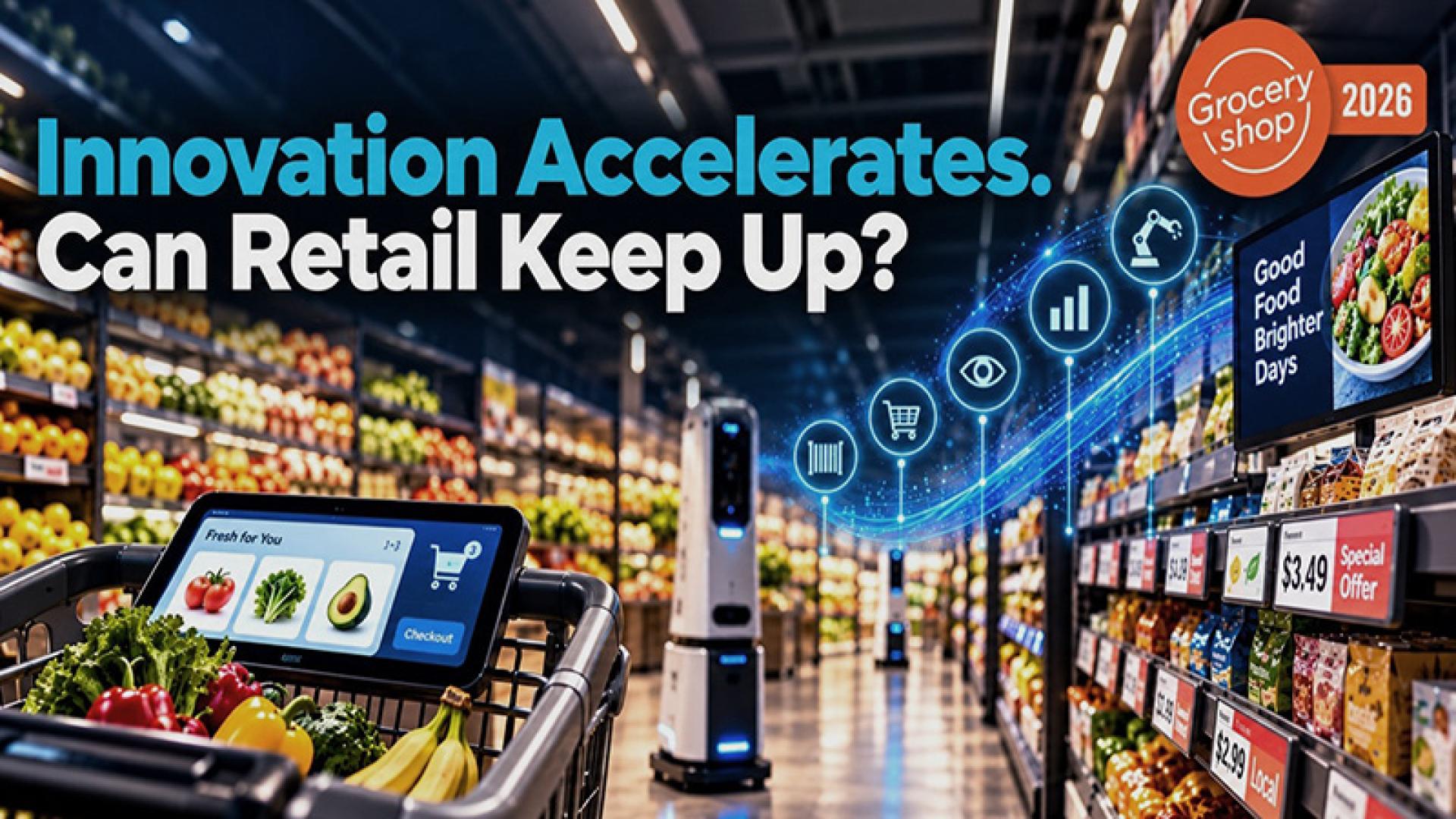
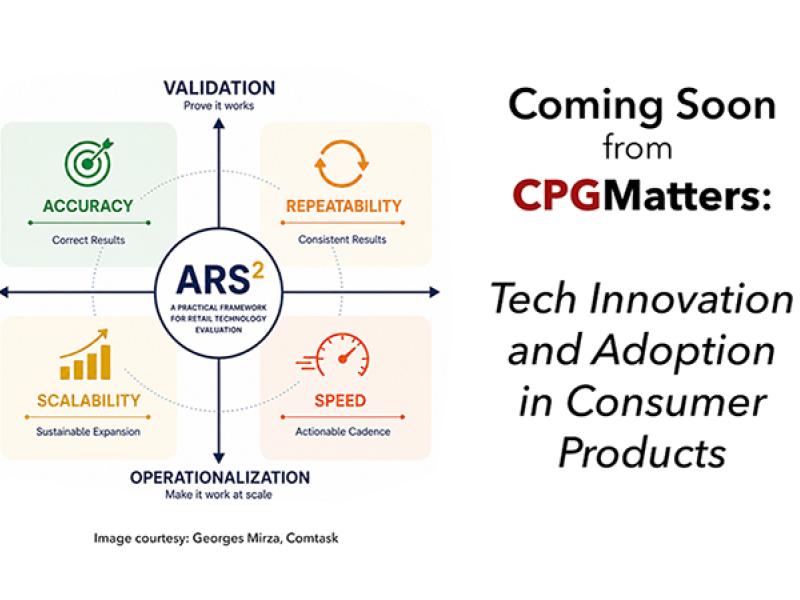
THIS YEAR’S GROCERYSHOP showcased a wide range of solutions shaping the shopper experience in retail, as usual. Beyond the hype, I continue to focus on finding innovative solutions, the problems they solve, and their ability to deliver ROI accurately, repeatedly, at scale, and with speed.
As at previous conferences, the focus is shifting toward operationalizing many of these innovations. Despite all the claims and messaging, I still see us in the very early stages of a long journey that will surely disrupt many of the established capabilities we have grown accustomed to using daily. The technology landscape is still evolving, with new solutions emerging and morphing with existing capabilities being redefined at a rapid pace.
The absence of some key players was evident. Perhaps they are hunkering down, working to deliver on the capabilities they have been discussing since AI started trending. Meanwhile, emerging solution providers are taking advantage of the opportunity, filling the void.
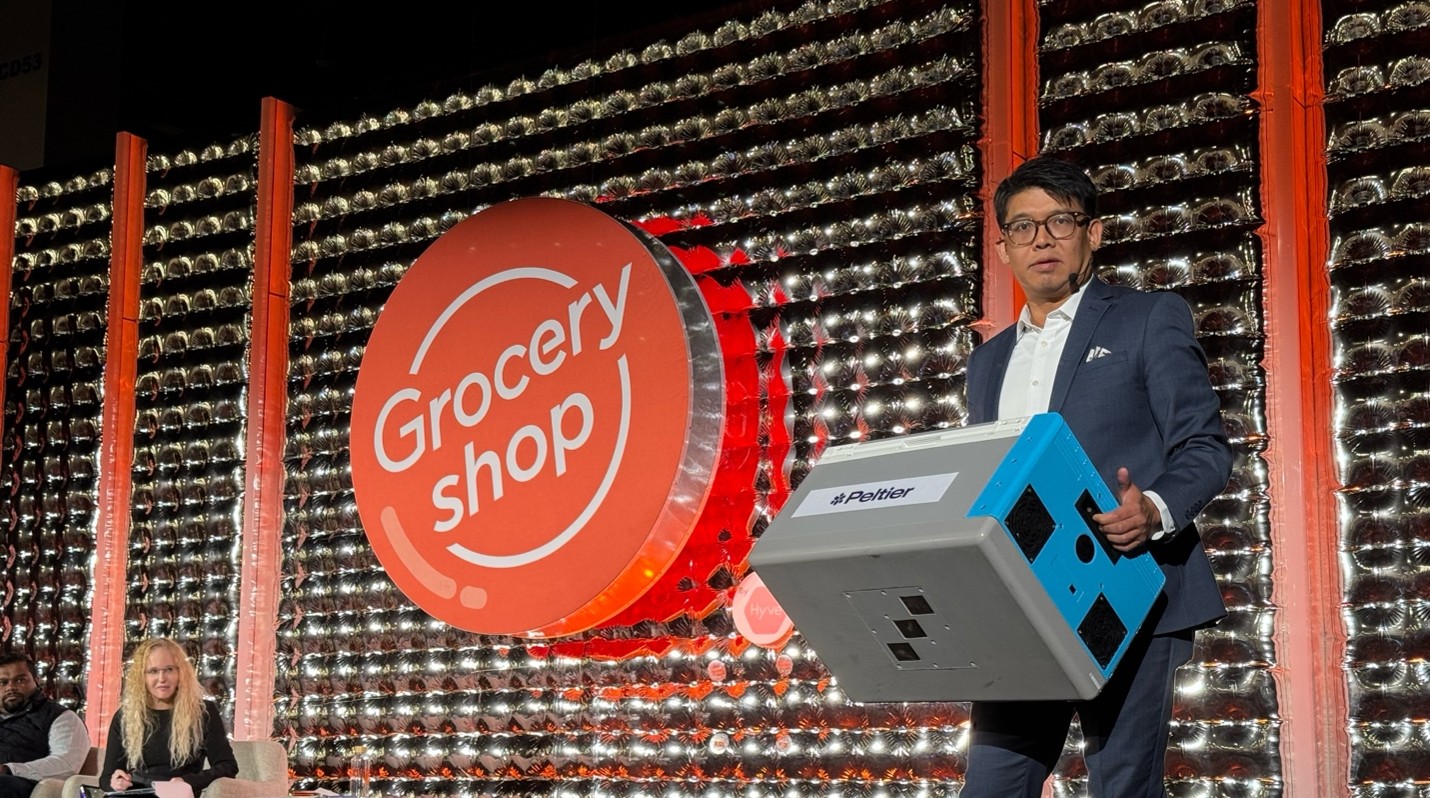
Hanson Li, CEO of Peltier, hoists a cooler box on stage as Deb Weinsweig of Coresight Research looks on (photo by Georges Mirza)
Start me up
At Groceryshop, my conference experience always begins in the startup track. Deborah Weinswig of Coresight Research continues to do a fantastic job curating the companies and keeping the pitches on track, despite the limited time available.
Many of the innovations I observed were point solutions addressing specific retail and CPG problems, some longstanding and others emerging with advances in technology.
ShelfLife tackles a basic but costly grocery problem. Traditional UPC barcodes identify products but do not capture expiration dates. Its solution introduces an additional barcode associated with the manufacturer's UPC and product expiration date, allowing retailers to better manage expiration, markdowns, replenishment, and waste. The system works alongside existing inventory management and POS systems, using standard barcode printers. Simple and smart, I thought.
Peltier caught my attention with its approach to rethinking refrigeration for grocery fulfillment. Instead of traditional compressor-based cooling, the company uses semiconductor technology in portable, temperature-controlled totes. These can support grocery e-commerce staging and potentially robotic fulfillment, using existing store space more efficiently while reducing the time and cost of order handling.
Perfect Store Group is taking a different approach to the traditional CPG sales brokerage model. Rather than introducing another AI tool, the company combines AI with experienced sales professionals to automate much of the work involved in preparing category reviews, presentations, and retailer follow-ups. The objective is to reduce administrative work and allow sales teams to spend more time selling. I am curious how this approach will challenge the traditional brokerage model as AI continues to evolve.
Retail media evolution
I had an interesting one-on-one discussion with Brian Monahan, recently of Albertsons Media Collective, about the evolution of in-store retail media. Albertsons is rolling out a network of digital screens across its stores, connecting in-store advertising with its broader digital media ecosystem, what Brian describes as reaching shoppers from “couch to checkout.”
I believe in-store retail media has the potential to become far richer in shopper data and insights than what we've seen with traditional online shopping. As this infrastructure expands and technologies mature, the opportunities will extend well beyond advertising, providing deeper shopper insights, improving store operations, and enabling more personalized shopping experiences. Something I am tracking closely as several emerging technologies continue to evolve.
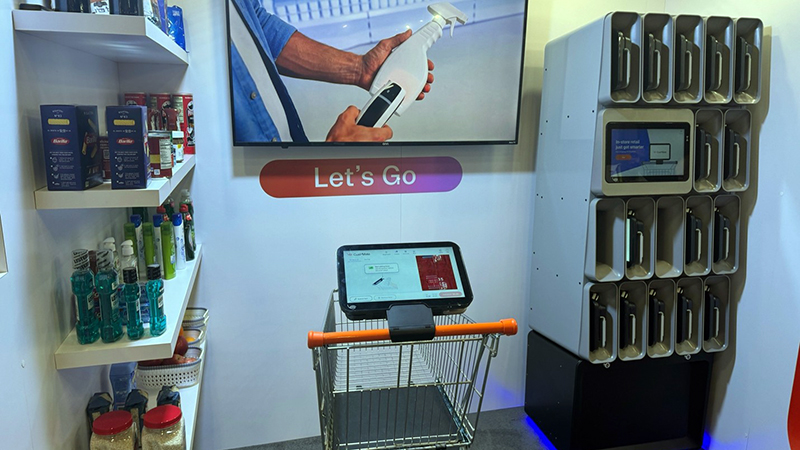
Shopping cart innovation
Cust2Mate caught my attention with its smart shopping cart technology. Rather than replacing existing shopping carts, the company offers a retrofit solution with a detachable touchscreen that supports product scanning, personalized promotions, shopping lists, and checkout directly from the cart. The retrofit approach is an important differentiator, potentially making the solution easier to deploy and scale. The ability to engage shoppers throughout their store visit is particularly interesting to me, combining convenience with contextual retail media opportunities.
I am curious how this capability evolves and integrates with shoppers' personal devices to create a more seamless shopping experience. We will likely see several approaches emerge to deliver on the promise of retail media. Success will depend on addressing multiple use cases to generate enough ROI to justify deployment at scale.
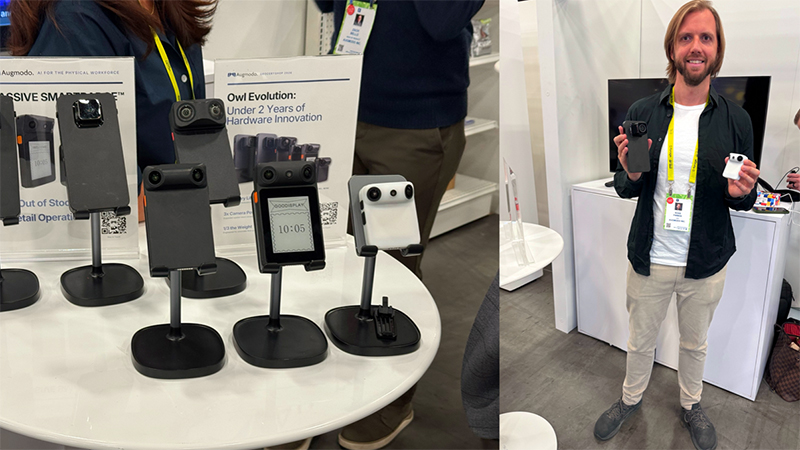
Ross Finman showed off generations 1 - 6 of Augmodo’s wearable smart badges (Georges Mirza photo)
Not-so-fixed
Augmodo was my top pick from the Groceryshop 2024 startup track, and I've been following its progress ever since. I caught up with CEO Ross Finman to see how far they've come. What impressed me was the pace of innovation: six iterations of their camera-equipped smart badges in just two years, capturing shelf conditions as employees go about their daily activities.
Each iteration incorporates lessons learned from real-world deployments, improving design, data collection, and processing. Too many improvements to cover here, but it's encouraging to see how quickly the company is evolving and responding to real-world needs.
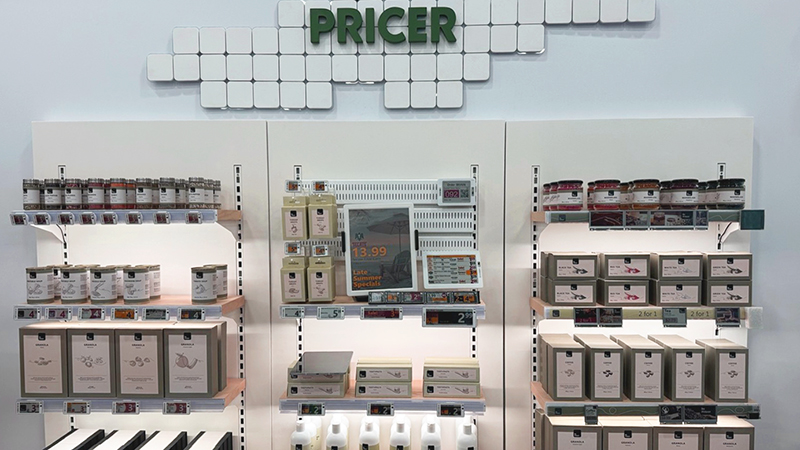
Pricer brought a full array of ESL options to the exhibit floor (Georges Mirza photo)
ESL innovation continues
Several ESL solutions were on display at Groceryshop, including Vusion, with providers continuing to expand their capabilities and market presence.
Pricer introduced its Avenue platform, taking electronic shelf labels beyond pricing into a more engaging shopper experience. I noticed several advancements since seeing the solution at NRF, particularly in its overall design, modularity, and presentation. The modular, battery-free displays allow retailers to add product information, graphics, and branded content directly at the shelf edge. What caught my attention were the results of a recent UK store study, reporting an average sales uplift of 2.2%, increasing to 4.8% when brand logos were included.
ESL technology continues to evolve, and I like its potential to bring retail media closer to the point of purchase. It does make me wonder, what took us so long in the US to embrace this technology?
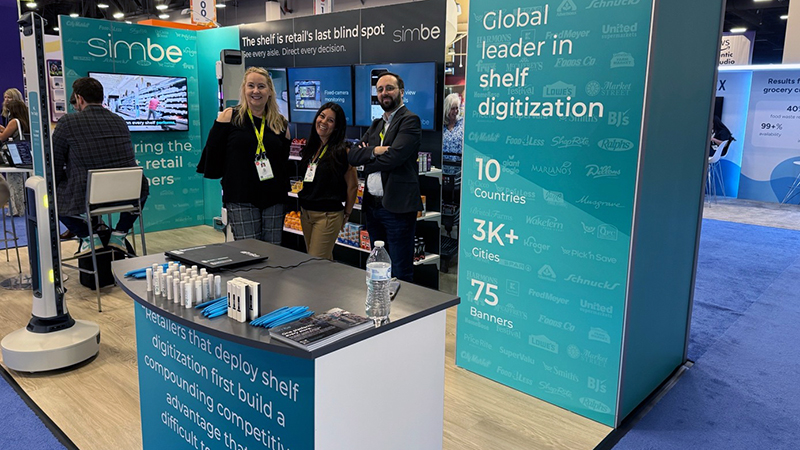
The Simbe team celebrated a milestone for its Tally shelf-scanning devices (Georges Mirza photo)
Robots approach critical mass
Retail robotics is finally reaching scale, with Simbe surpassing 3,000 Tally robots under contract. An impressive milestone, but the bigger question is what happens next. How quickly will established retail solutions begin consuming this continuous stream of shelf intelligence to drive execution? A big disruption is in the making; it will render many existing solutions obsolete and the rest much more relevant. The question is which providers will adapt.
Meanwhile, Blue Collar Robotics brought a more ambitious use case to the startup stage: a robot designed to physically pick products from store shelves to fulfill online orders. Still in its early stages, but a glimpse into where robotics is headed, moving beyond observing shelf conditions to actually performing the work.
Retail tech’s never-a-dull moment era
Innovation is increasingly directed toward eliminating the work between identifying a problem and resolving it. Many startups are not introducing new problems or even entirely new capabilities. Instead, they are rethinking how existing processes can be executed with fewer manual steps, better information, or different operating models.
The retail solution innovation field is evolving at an astonishingly rapid pace. But innovation alone doesn't guarantee adoption. The real test is whether these solutions can deliver accurately, repeatedly, at scale, and with speed.
The bigger question is whether the retail ecosystem and its established technology stack can evolve fast enough to absorb all this innovation. History suggests that retail isn't particularly quick to adapt. Will established solution providers step up and integrate these emerging capabilities into solutions retailers can readily adopt? Or will retailers need to become more entrepreneurial, assembling their own end-to-end capabilities from an expanding field of innovative point solutions?
Either way, the pace of change isn't slowing down. We're living in a never-a-dull-moment era of retail technology, and it's exciting to watch it evolve rapidly right in front of us, in real time.
 Georges Mirza is the founder of ComTask and a retail and CPG technology innovator who has helped shape the evolution of category management solutions and retail analytics. He has led the development of market-leading solutions widely adopted across the industry and pioneered advances in robotic data collection and image recognition to address critical retail challenges including out-of-stocks and inventory accuracy. Georges is the creator of the ARS²™ Framework, designed to bring greater transparency to innovation maturity by assessing whether solutions can deliver accurately, repeatedly, at scale, and with speed. Today, Georges advises retailers, CPG companies, and technology firms on innovation strategy, solution evaluation, connect with him on LinkedIn or email gmirza@comtask.com