Challenger Soft Drink Brands Draw From a History of Moxie
THE SOFT DRINK SECTOR is brimming with challenger startups who aspire to introduce the next billion-dollar specialty soda. Is there a formula for billion dollar success?
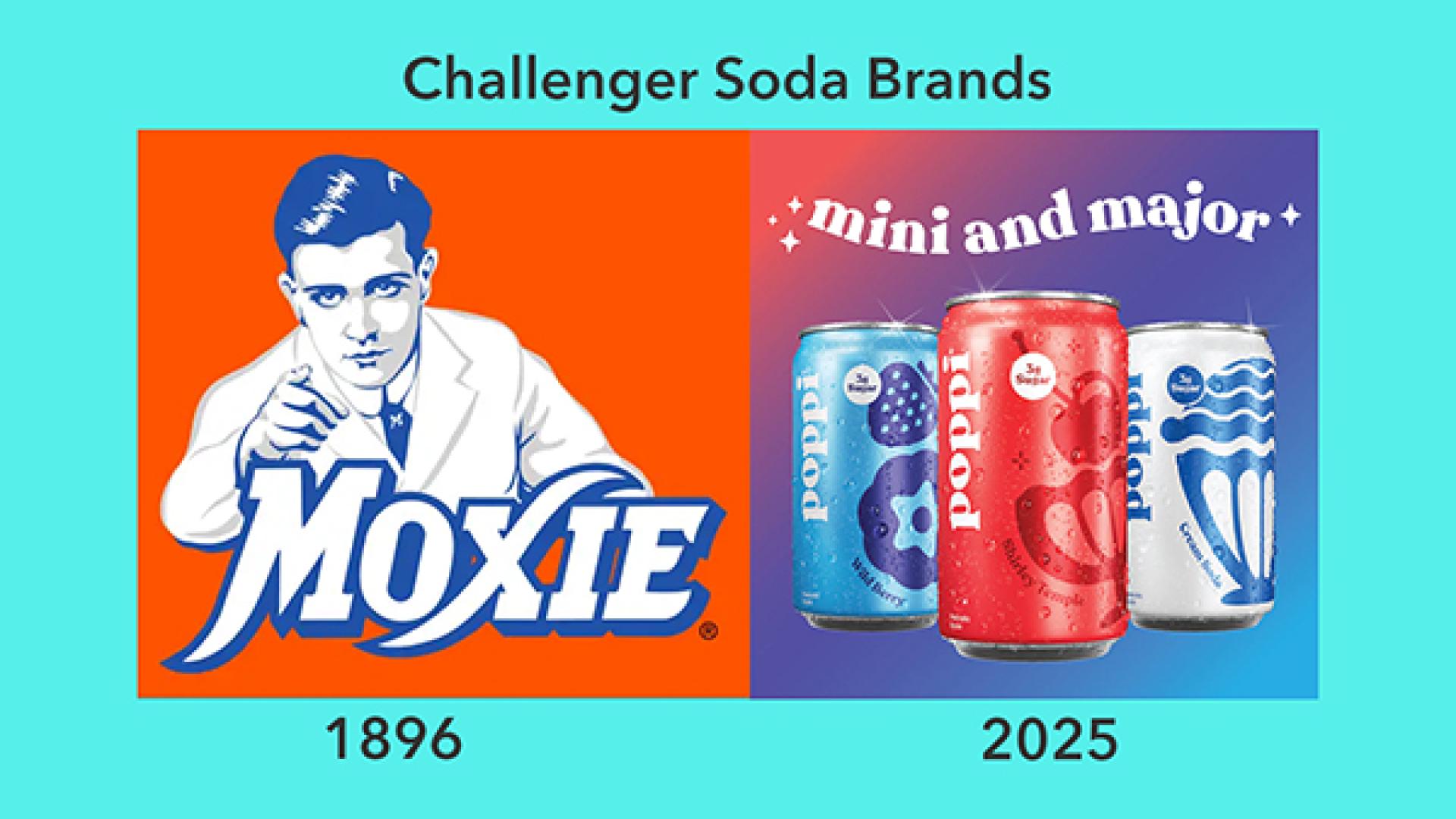
Certainly, many dream of replicating PepsiCo’s acquisition of the fast-growing prebiotic soda brand Poppi on May 19, 2025, in a transaction valued at $1.95 billion. Not only did the founders Chris Hall, et al, get rich, but the product gained extraordinary distribution power.
We might say that Poppi’s journey to riches began with a little Moxie.
Launched in 1896 in Maine, Moxie was a carbonated soda flavored with traces of bitter gentian root extract, said to be good for digestion. It was designated the official state soft drink in 2005. We like that it earned numerous stealth mentions in Mad Magazine beginning in 1959, eventually leading to a “Mad About Moxie” ad campaign that boosted sales.
Moxie was arguably our first branded soft drink. As with many of the other early contenders it started as a patent medicine. Gentian root really had digestive value. The name came from a Native Abenaki or Penobscot term meaning "dark water" or referring to a place in Maine where the medicinal plant grew. Moxie was eventually acquired by The Coca-Cola Company in 2018. It is still bottled in Londonderry, New Hampshire and distributed regionally. A long road for a challenger brand.
Challengers all
A second early contender for America’s thirst was Hires Root Beer (also 1876) which debuted at our ground zero for CPG, the Philadelphia Centennial Exposition. Charles Elmer Hires, a pharmacist, created the formula.
In quick succession we had Dr Pepper (1885), Coca-Cola (1886) and Pepsi-Cola (1898). The latter– which we might say was the first challenger brand against Coke. Hundreds of mostly regional brands and bottlers followed. Regional made sense—water is heavy and expensive to ship.
Consider that Moxie, Hires, Coke and Pepsi were all challenger brands with “health” positioning in their early days. Coke was first to use a new ingredient (coca leaf extract). Moxie, Hires and others used plant extracts.
New formulations for success
One-hundred-fifty years later, many of today’s challenger sodas follow a similar playbook. We see new brands that target with new tastes and benefits. Ingredients like prebiotics, zero or low-sugar and natural flavors use health, “free-from” product claims and even premium pricing as the selling points. Some are offering more exotic ingredients, like CBD, and mushroom extracts.
As before, the newest brands need to innovate, to differentiate from the giants. For Poppi, the incorporation of small amounts of apple cider vinegar and prebiotic fiber was the distinction it needed to build a brand following.
Lacking millions to advertise, today’s challenger soft drinks leverage social media to ignite pull demand. They tap into consumer attitudes and influencers to drive home the message. Some appeal to a sense of belonging. For these brands, social media is the new Philadelphia Centennial Exposition, the gathering place for the thirsty.
Why big brands buy challengers
Since 2004 the volume for classic carbonated soft drinks has dropped. However, consumers are drinking more bottled drinks than ever, driven in large measure by challengers.
As new soft drink brands drive innovation, the giants seem to observe the trend-scape from a distance, then move to catch up, sometimes by opening their checkbooks, buying promising new brands and bringing them national, leveraging their vast distribution networks.
Pepsi’s acquisition of Poppi is a shining example for today’s challenger soft drink entrepreneurs. Rival Olipop, with a reported $2B market cap, has said it does not seek such an exit—it’s not clear if that’s a negotiating position. Liquid Death, a brand that sells water in cans, had a reported $1.4B valuation as of its 2024 investment round. It has said it is considering an initial public stock offering.
Today’s beverage giants like Coke, Pepsi and Keurig Dr Pepper take more of a portfolio view when it comes to adding new brands. They tend to focus on their go-to-market power and relations with the retail trade, and leave the big creative risks to the challengers willing to take chances and pivot quickly.
For the rare soft drink challengers with true moxie, unicorn valuation and national distribution is the prize.