Third Parties Still Walk the Last Mile for Brands
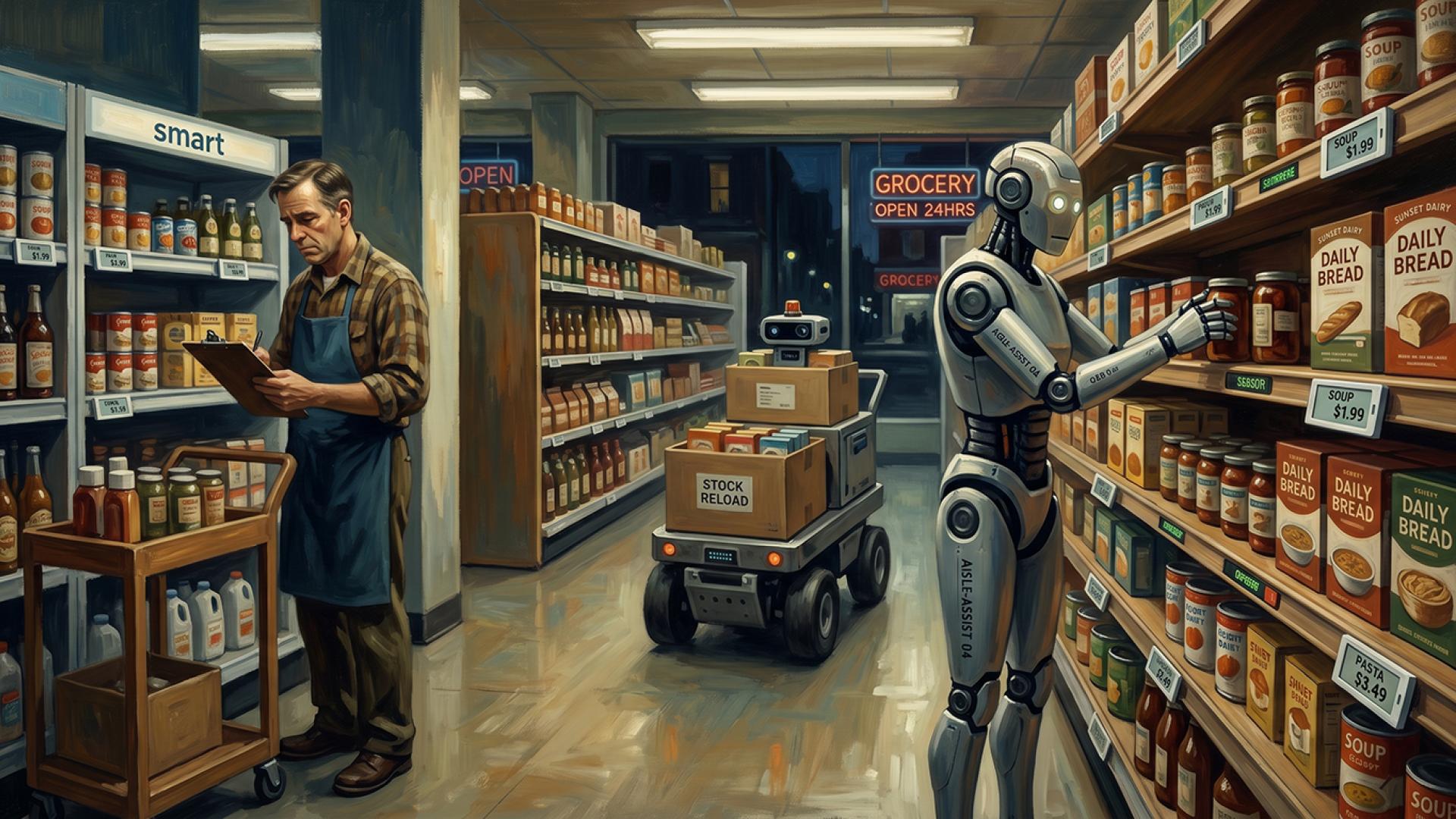
THERE IS NO MOMENT OF TRUTH if there’s no product on the shelf.
Brand marketers understand this all too well. The finest products, backed by alluring promotion and sophisticated demand-generation, are still dependent on a relatively low-tech mechanism—a pair of human hands.
Warehouse-distributed CPGs decided more than a generation ago that they would not maintain direct field forces to do the relentless work of shelf monitoring and replenishment in stores. Far more cost-effective to engage one or more third-parties or manufacturer rep firms to do this routine work.
Same for periodic store re-sets and display assembly. Merchandising service companies could offer superior economics and bear the burden of managing extensive field forces. CPGs could stick to what they do best—conceive, ship and promote products. The third parties could handle the work of in-store implementation.
Evidently this business model meets a significant need. The 10 largest merchandising firms in the U.S. account for an estimated $13 billion in billings, nearly all funded by brands.
This article is the first of a planned series on the future of in-store implementation and merchandising
Brands value the economies of scale and speed to market offered by this arrangement. But they are also aware, painfully at times, that handing off this essential work has also limited reporting accuracy and performance. Too many authorized displays not erected. Too much planogram drift. Too many out-of-stocks. Too little reliable information about conditions at the shelf.
The immense cost of inventory inaccuracy (under and overstocks) has been well documented by IHL Group, but the impact of merchandising inaccuracy has been much harder to quantify.
The Illuminated Store
For a very long time, stores were a “black box” for brands who could not monitor their performance in real time. Merchandising firms would gladly provide spot audits and proof of performance, but results were slow to arrive and they seemed to cost more than the benefits they could deliver.
This is beginning to change now, as digital sensing methods have made inroads to illuminate the store environment for retailers and brands. Fixed and moveable cameras, electronic shelf labels and autonomous devices (okay, robots) are capturing more timely and more accurate information that can inform in-store implementation and provide feedback and measurements that brands can actually use to evaluate outcomes and make better decisions.
This data is highly strategic, and third party merchandising companies are starting to recognize that they need to be in the business directly. Recently we have been hearing terms like “shelf scanning as a service.” Why should retailers invest so much in store hardware when a third-party can handle both the capital outlay and system management?
The harbinger of sorts was the announcement, last September, that merchandising firm Driveline had collaborated with retail robotics top-contender Brain Corp. to form a new joint venture called ShelfOptix. This new partnership would own a portable fleet of scanning robots and bring them from store to store as needed.
Third-Party Power
It’s no secret that the retail services industry in the U.S. is highly concentrated, primarily dominated by three major players—Advantage Solutions, Acosta, and Crossmark. With a little help from AI, we have compiled a top-ten list:
| Top U.S. Retail Sales & Merchandising Services Companies | |||
|---|---|---|---|
| Company Name | Est. Annual Revenue (USD) | Major Brands Served | |
| 1 | Advantage Solutions | $3.54 Billion (FY 2025) | Unilever, PepsiCo, Mars, Kellogg's, Walmart |
| 2 | Acosta Group (Incl. Crossmark) | $2.5 Billion+ (Combined Est.) | P&G, Campbell’s, Coca-Cola, Family Dollar, Kraft Heinz |
| 3 | Premium Retail Services | $3.1 Billion (Reported) | Best Buy, Walgreens, Walmart, Logitech, Samsung |
| 4 | Driveline Retail | $1.0 - $2.9 Billion | Target, Samsung, Lowe's, Dollar General |
| 5 | SAS Retail Services | $500 Million+ (Part of Advantage) | Kroger, Albertsons, Meijer |
| 6 | SPAR Group | $250 Million+ (U.S. Ops) | CVS, Rite Aid, various Global Retailers |
| 7 | T-ROC | $400 Million (Est.) | Apple, T-Mobile, Samsung, Comcast |
| 8 | MarketSource | $500 Million (Est.) (part of Allegis Group) | Ford, HP, Target, various Wireless Carriers |
| 9 | 2020 Companies | $300 Million (Est.) | Dell, Microsoft, Samsung, DirecTV |
| 10 | Channel Partners (Incl. BDSsolutions) | $200 Million (Est.) | Google, Meta, GoPro, Bose |
| Source: Compiled by CPGMatters using AI research tools | |||
Increasing stakes; more coverage
Bringing branded products to market on a national scale is a vast and intricate activity that few, if any, CPGs can accomplish without the use of third-party merchandising partners. Even the DSD giants, like soft-drinks, snack foods, and beer distributors reportedly retain outside help to help with surge coverage from time to time.
The in-store information capture and physical implementation work performed by third-party merchants today is generally under-reported and under-analyzed in the business press. As the physical store becomes more digital and more visible, the role of hands-on merchants seems destined to become more crucial.
Faster, more detailed, information from smart shelves and robot scanners will create greater retailer scrutiny and lead to more physical tasks. The payoff should come in the form of better product and category performance.
[Editor’s note: CPGMatters is committed to continued coverage of this essential business activity. Readers are invited to share comments or by email: editor@cpgmatters.com]