Protein as ‘Platform’: Why CPG’s Hottest Ingredient Has Staying Power
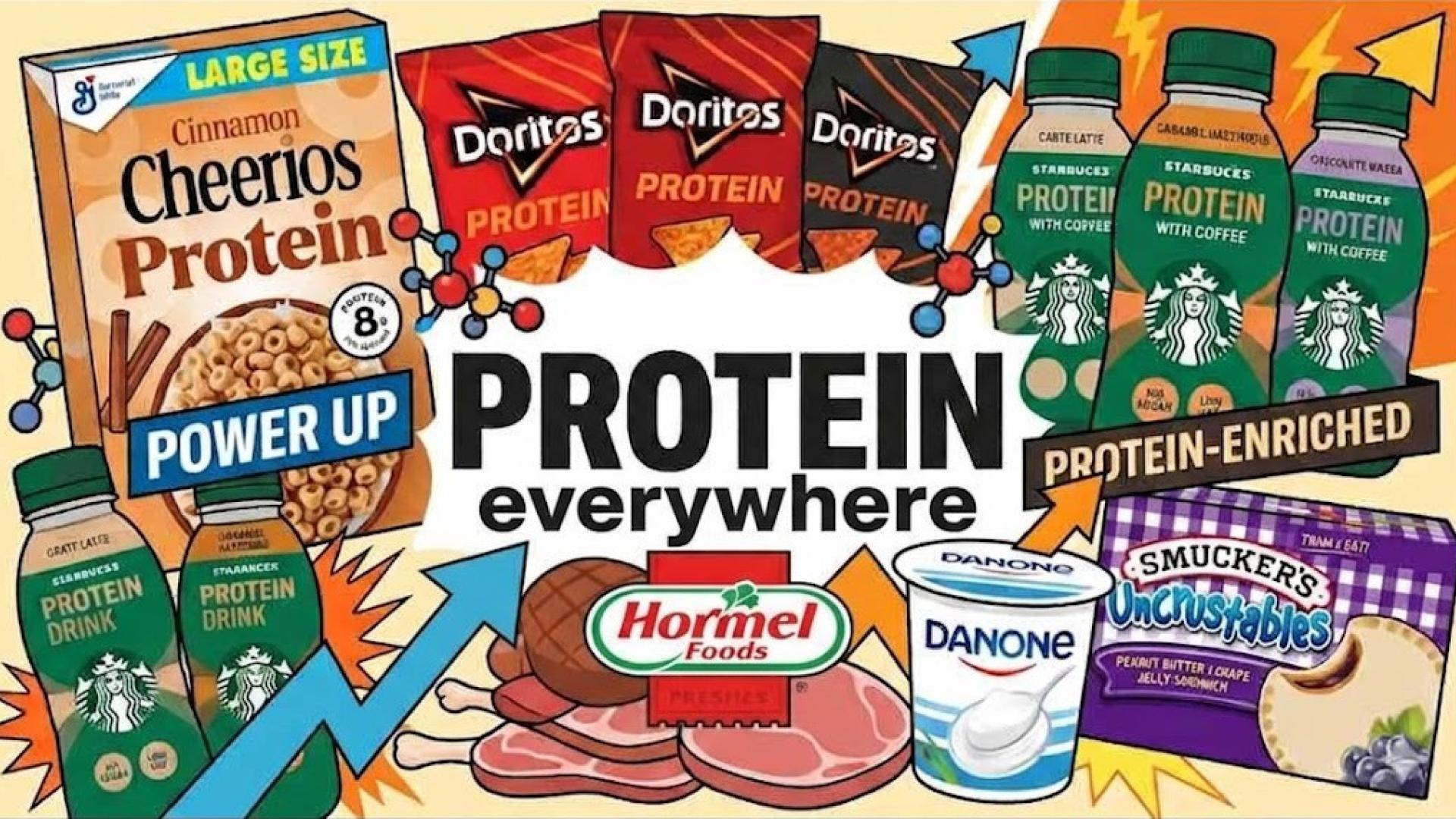
A RECENT TRIP THROUGH THE AISLES at Wegmans underscored a broader shift reshaping center store and perimeter alike. A large Chobani display promoted an offering with 20 grams of protein. Breakfast cereal boxes highlight their added protein. Salty snacks now compete on grams of protein per serving.
Protein is no longer confined to meat, dairy or sports nutrition. It has become a cross-category growth engine and, increasingly, a pricing lever.
While GLP-1 weight-loss medications have accelerated consumer focus on satiety and blood sugar management, executives say the movement predates the drugs. The shift reflects a deeper recalibration of how consumers define health, prioritizing functional benefits over empty calories.
“Today’s consumers are reshaping their routines around a protein-centric lifestyle and actively seeking convenient ways to incorporate it,” said Abigail Evans, senior insights manager, enterprise, at Hormel Foods, told CPGMatters.
According to the Hormel Foods 2026 Trends report, 75 percent of consumers are trying to increase protein intake, and 63 percent seek a protein source at every main meal. That frequency signal is significant. Protein is no longer a niche occasion driver. It is becoming an expectation.
The latest USDA dietary guidelines, which emphasize protein and fiber, reinforce the shift. “The new dietary guidelines are all about fiber and protein, and the protein recommendations have been doubled,” said Gina Logan, associate director, category insights, brand intelligence firm Kantar, in an interview
Logan does not expect protein to follow the boom-and-bust cycle seen with past low-fat or low-carb diets. “I don’t think we’ll see the rise and fall we’ve seen with other trends,” she said.
From Ingredient to Platform
The strategic significance lies in protein’s expansion beyond traditional sources. Consumers are no longer limiting intake to meat, dairy or shakes. They increasingly expect it in cereal, snacks, pasta and even indulgent formats.
“Protein is rapidly expanding into unexpected categories such as cereals, pasta, snacks and even treats,” Hormel’s Evans said. “For Gen Z and millennials, protein isn’t a nice-to-have anymore. It’s nonnegotiable.”
[Editors note: See Q&A with Hormel. – LINK]
For manufacturers, that expansion transforms protein from a single ingredient into a platform that supports renovation, line extensions and premium positioning.
PepsiCo’s recent introduction of Doritos Protein illustrates the strategy. The product delivers 10 grams per 1-ounce serving, with higher-protein single-serve formats to follow. The company also introduced Starbucks Coffee + Protein, signaling that even beverage occasions are being reformulated around functional benefits.
“The launch of Doritos Protein marks our expansion into the protein snack category,” said Hernán Tantardini, chief marketing officer, PepsiCo Foods U.S.
Ram Krishnan, CEO of PepsiCo Beverages North America, framed the coffee-protein beverage as precision positioning rather than simple fortification. “We’re focused on delivering protein in ways that work with the body, not just adding grams,” he said.
As more brands enter the space, competitive advantage will depend less on protein presence and more on formulation credibility, taste retention and brand alignment.
Margin and Market Momentum
Protein’s financial case is equally compelling for brand marketers.
The global protein ingredients market is projected to reach $125.1 billion by 2031, expanding at a 6.5% compound annual growth rate from 2024 to 2031, according to DataM Intelligence. What was once largely confined to sports nutrition has moved firmly into mainstream CPG.
NielsenIQ’s Global State of Health & Wellness 2025 report suggests the protein push is intertwined with fiber, gut health, and interest in plant-based foods. Half of surveyed consumers plan to buy more high-fiber foods in 2025, and 40% plan to increase purchases of superfoods, high-protein plant-based foods or probiotic products.
Products marketed as protein-rich posted 9.7% value growth and 4.8% volume growth in the United States for the 52 weeks ending Feb. 22, 2025, according to NIQ Product Insights. Value growth outpacing volume suggests pricing power remains intact.
Danone reported 3.5% year-over-year growth in its Essential Dairy and Plant-Based division in 2025, with high-protein formats delivering double-digit expansion in Europe and North America. The results reflect broader category momentum.
Broadening the Target
Importantly, the protein opportunity extends well beyond gym-centric consumers.
“Protein continues to be a priority for people of all ages. We created Cheerios Protein with families in mind,” said Emilie Knox, vice president and business unit director at General Mills.
The J.M. Smucker Co. took a similar approach with protein-enhanced Uncrustables varieties that also emphasize fiber and whole grains. The strategy reflects the convergence of convenience, functionality and breakfast disruption.
The broader takeaway for CPG executives is clear. Protein is not a short-term claims strategy. It is becoming a baseline attribute, particularly in categories where consumers already scan labels for functional benefits.
The next competitive phase will center on differentiation, including protein quality, complementary nutrients, clean labels and sensory integrity. Brands that treat protein as a temporary marketing lever risk commoditization. Those that embed it into portfolio strategy stand to capture both loyalty and margin.
Protein’s move beyond the meat case is not simply about grams. It is about repositioning everyday foods as functional solutions. That shift appears durable.