New Weight-Loss Drugs Shake Up the Snack Food Business
IT IS POSSIBLE that no single individual wields more influence in American popular culture than Oprah Winfrey. In everything from books to politics to weight loss, the opinions of the uber-celebrity, talk-show host, spiritual advisor, magazine publisher, movie star and all-around icon matter to more people more significantly than practically anyone else.
Especially weight loss. And, perhaps also especially, antennae go up when Winfrey turns on a dime and endorses a new approach to her lifelong struggle with extra pounds that she previously had panned categorically. So, in December, after Winfrey did an about-face and shared with her worldwide fan base that she’d turned to new weight-loss drugs to help stay on top of her lifelong battle with obesity, worlds shook.
Most especially, the businesses of the makers of this new class of drugs that includes Ozempic, Wegovy and Mounjaro took heart. Also rumbling was the landscape for food and beverage companies, especially those that make nutrition-light snacks from soda to pretzels. Morgan Stanley predicts the new class of weight-loss medications will become pharmaceutical blockbusters worth a collective $54 billion by 2030. The Wall Street firm’s analysts are drawing an analogy to the takeoff of high-blood-pressure medications, which went from a nascent market in the 1980s to a $30-billion one a decade later.
Even before Winfrey’s endorsement, a boom in sales of the weight-loss drugs was shaking up the U.S. food business with the prospect that American patients of the appetite-suppressing pharmaceuticals no longer want to consume junk calories as wantonly as before.
Now, CPG companies across the western world are scrambling to catch up to the Wegovy effect.
“Snacking line extensions are where companies make their money in CPG,” Cathy Kapica, former head of global nutrition for McDonald’s and now a consultant and head of the Awegrin Institute, told CPGmatters. “It may force CPG companies to re-evaluate their product portfolios. A lot of them rely on heritage products that have been around for 150 years. Business may have to catch up with the sciences.”
And indeed, CPG companies have been responding. Nestle said it was working to create companion products that could help drug patients as they lost muscle mass, in new lines that could hit the market this year. This was very shortly after Nestle’s outgoing chief financial officer, Francois-Xavier Roger, played down fears, saying dropout rates for Ozempic use are high and that most of Nestle’s categories are protected.
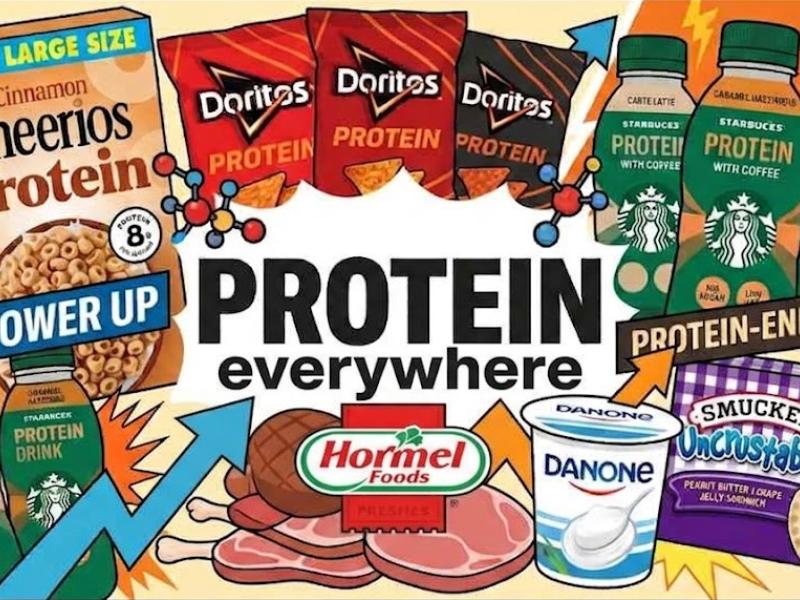
Abbott Laboratories, maker of Ensure shakes and powders, told the Wall Street Journal that it’s designing a new protein-laden nutrition drink for the same purpose. And General Mills CEO Jeff Harmening said the grain-product giant is developing products suited for drug patients looking for more protein in their diets.
Kellanova CEO Steve Kahillane said the former Kellogg Co. was studying Ozempic’s potential impact on dietary behaviors so it could respond if needed. “We are by no means complacent,” the chief of the producer of snack brands including Cheez-Its, Pringles and Rice Krispies told Bloomberg. Conagra Brands said on its quarterly earnings call that it’s prepared to adapt to potential changes in consumer eating patterns such as a shift to smaller portion sizes.
And all this was basically before Winfrey dropped her bombshell. Just three months after publicly disdaining use of these medications as “taking the easy way out,” in the People story in December, a defiant Winfrey explained why she’d changed her mind and had begun a prescription to one (which she didn’t specifically identify).
“I realized I’d been blaming myself all these years for being overweight, and I have a predisposition that no amount of willpower is going to control,” she said. “Obesity is a disease. It’s not about willpower — it’s about the brain,” added Winfrey, who’s a major stakeholder and board member of Weight Watchers, a pillar of her previous approach to willpower-based dietary control.
Even Weight Watchers has changed its tune. Not long before Winfrey’s stunning turnabout, the company overturned its founding philosophy by paying $106 million to acquire a telehealth company called Sequence, a subscription service that prescribes weight-loss drugs via remote appointments. For the first time, Weight Watchers clients can combine prescriptions for drugs like Ozempic with the brand’s workshops and other traditional offerings.
But as some CEOs were sounding warnings about potentially flattened snacking sales and profits even before Winfrey turned the tables, and overhauling their product-development priorities in response, others were taking comfort in the notion that Ozempic will fade into just one among many consumer regimens — or even prove to be another fad in the long cavalcade of failed “diet” schemes like Snackwells cookies.
PepsiCo Chief Financial Officer Hugh Johnson, for instance, told Bloomberg in the fall that “we don’t detect [reasons for concern] in any of our numbers right now. It’s very early days.” Coca-Cola CEO James Quincey said around the same time he’s not concerned, in part because of the company’s decades-long diversification into diet and zero-sugar alternatives.
There also are reasons for widespread doubts about the long-term staying power of Ozempic-fueled weight loss and, therefore, about the severity of threats to the US snacking business.
Indeed, some other celebrities warned about using Ozempic, such as Sharon Osbourne, who told USA Today that “you can lose so much weight and it’s easy to become addicted to that, which is very dangerous.”
“This is just another fad, but raised to a slightly different level,” Kapica, the consultant, told New Nutrition Business. “Diets come and go, miracle pills come and go, diet foods come and go.”
Skeptics such as Kapica focus on significant issues for the drugs, including the cost of $900 to $1,000 a month for Ozempic, which often is only partially covered by insurers or not covered at all, depending on the level of coverage and the specific condition for which the medication is being prescribed. For the non-diabetic,” Kapica said, “not only is it expensive, it’s an injection that you have to do for the rest of your life. Americans tend to not want to take even their pills, much less an injection.”
Another important consideration is that, if a patient stops taking the drugs, there are no leftover effects and the person’s metabolism returns to its pre-prescription state.
“Here’s the problem,” Kapica said. “It’s something you have to take for the rest of your life, because once you go off it, the weight will probably come back on. It’s like an addiction. Another issue is: Is it going to burn out your pancreas? Is it really a long-term solution to begin with? Will Type 2 diabetes just become Type 1?”
One of the few business categories to win either way might be supermarkets with pharmacies, which have access to the weight-loss drugs — and also sell snacks.
“Pharmacy staff can talk to [weight-loss drug patients] about how to manage their health while taking these medications, including healthier eating habits,” Peter Matz, director of food, pharmacy and health policy for FMI: The Food Industry Association, told CPGmatters.
“Therefore, grocery pharmacies are very well positioned to support customers’ health and well-being goals,” he said. “Patients can walk the aisles and consult with in-store registered dietitian nutritionists to learn how to improve their eating habits in the same location that they pick up their prescriptions.”